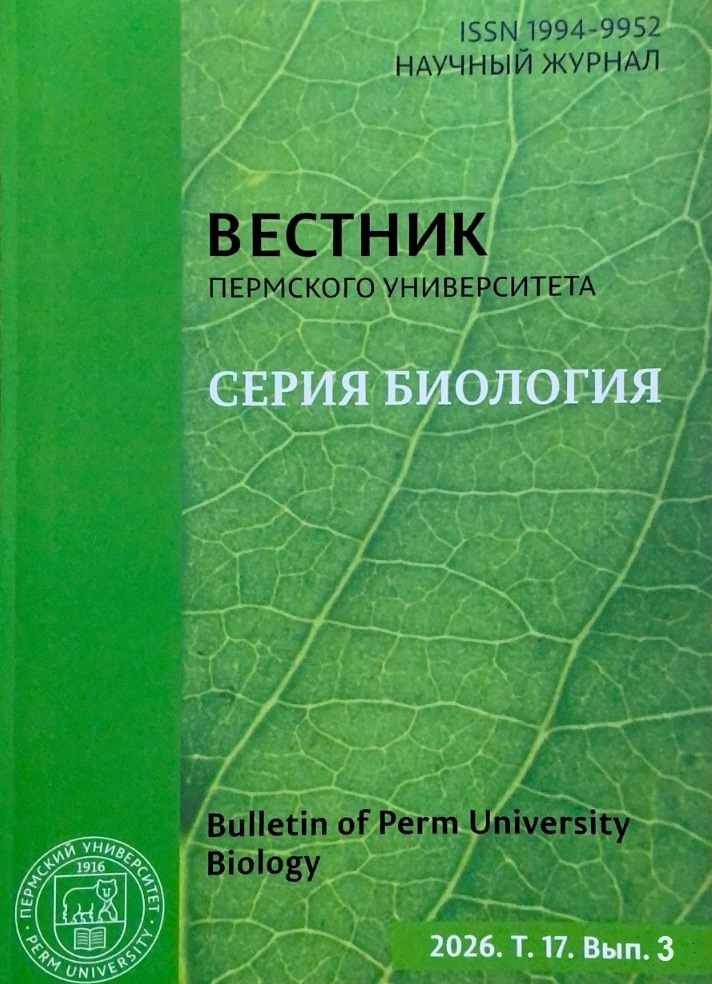
The influence of biological and chemical preservatives on the microbiome and fermentation processes during corn ensiling
DOI:
https://doi.org/10.17072/1994-9952-2026-3-319-325Keywords:
corn silage, biological and chemical preservatives, silage microbiota, fermentationAbstract
Corn silage is an important high-energy feed in cattle diets. Epiphytic microorganisms in the ensiled mass influence the fermentation process and feed quality; however, if ensiling protocols are compromised, undesirable microorganisms (such as yeasts and proteolytic bacteria, etc.) proliferate, reducing the nutritional value and aerobic stability of the silage. Therefore, research aimed at reducing the risk of undesirable microflora development and fermentation failure is highly relevant. The aim of the study was to evaluate the effects of biological and chemical preservatives on the microbiome and fermentation processes during corn ensiling. The study sample was silage made from Zolotoy Pochatok hybrid corn harvested at the waxy stage. The biological preservatives Biotrof-AS and Promilk, as well as the chemical preservative VIK 3C, were used for ensiling. The results indicate a positive effect of preservatives on the microbiota composition and nutritional value of silage. The treatment with the chemical preservative VIK 3C demonstrated the highest counts of bacteria with antimicrobial properties from the genera Lactobacillus (1×10¹² genom/g) и Bifidobacterium (3×10⁸ genom/g) and Bifidobacterium, which resulted in the highest sugar retention and reduced. The use of the biological preservatives Biotrof-AS and Promilk, compared to the chemical preservative, resulted in the highest lactic acid accumulation (83.89-84.22%) relative to all acids, leading to more effective suppression of undesirable microorganisms (Enterobacteriaceae, Candida albicans, Streptococcus, etc.) that reduce the nutritional value of the feed. The using of Biotrof-AS led to a significantly higher accumulation of acetic acid (0.74%) compared to other preparations, which contributed to the most effective suppression of undesirable microbiota, including proteolytic, and ensured the production of energy-rich silage. The established patterns between the structure of the microbial community of silage and its quality indicators justify the need for a multifactorial analysis of the effectiveness of preservatives.
References
1. Бондарев В.А. и др. Проведение опытов по консервированию и хранению объемистых кормов (ме-тод. рекомендации). М.: ФГУ РЦСК, 2008. 67 с.
2. Герасимов Е.Ю., Иванова О.Н., Кучин Н.Н. Силосование кукурузы // Карельский научный журнал. 2014. № 4(9). С. 165–169.
3. Доспехов Б.А. Методика полевого опыта (с основами статистической обработки результатов ис-следований). М.: Альянс, 2011. 352 с.
4. Йылдырым Е.А. и др. Изучение эпифитной микрофлоры как источника формирования силоса мик-робиоценоза методом NGS-секвенирования // Сельскохозяйственная биология. 2015. Т. 50, № 6. С. 832–838.
5. Клименко В.П. Научное обоснование и разработка эффективных способов повышения энергетиче-ской и протеиновой питательности силоса и сенажа из трав: дис. … д-ра c.-х. наук. Дубровицы, 2012. 367 с.
6. Косолапов В.М. и др. Физико-химические методы анализа кормов. М., 2014. 344 с.
7. Кучин Н.Н. Проблема аэробной устойчивости при заготовке и использовании кукурузного силоса // Адаптивное кормопроизводство. 2023. № 3. С. 69–87.
8. Мальцева О.Ю. и др. Влияние бактериальных культур на сохранность зеленых кормов // Вестник Воронежского государственного университета инженерных технологий. 2017. Т. 79, № 3. С. 174–179.
9. Победнов Ю.А. и др. Исследование факторов, определяющих аэробную стабильность силоса из ку-курузы, заготовленной в фазе восковой спелости зерна // Проблемы биологии продуктивных животных. 2021. № 1. С. 87–94.
10. Agarussi M.C.N. et al. Microbiome of rehydrated corn and sorghum grain silages treated with microbial inoculants in different fermentation periods // Scientific Reports. 2022. Vol. 12. Art. 16864.
11. da Silva É.B., Kung L. A meta-analysis of the effects of a chemical additive on the fermentation and aerobic stability of whole-plant maize silage // Agriculture. 2022. Vol. 12, № 2. Art. 132.
12. da Silva É.B. et al. Effects of a chemical additive on the fermentation, microbial communities, and aer-obic stability of corn silage with or without air stress during storage // Journal of Animal Science. 2020. Vol. 98, № 8. Art. skaa246.
13. Driehuis F. et al. Improving aerobic stability by inoculation with Lactobacillus buchneri // Proceeding of the XI th International Silage Conference. Aberystwyth, 1996. P. 106–107.
14. Gheller L.S. et al. Different organic acid preparations on fermentation and microbiological profile, chem-ical composition, and aerobic stability of whole-plant corn silage // Animal Feed Science and Technology. 2021. Vol. 281. Art. 115083.
15. Huo W. et al. Effect of lactobacilli inoculation on protein and carbohydrate fractions, ensiling character-istics and bacterial community of alfalfa silage // Frontiers in Microbiology. 2022. Vol. 13. Art. 1070175.
16. O’Brien M. et al. Quantification and identification of fungal propagules in well-managed baled grass si-lage and in normal on-farm produced bales // Animal Feed Science and Technology. 2007. Vol. 132, № 3. P. 283–297. DOI: 10.1016/j.anifeedsci.2006.04.013.